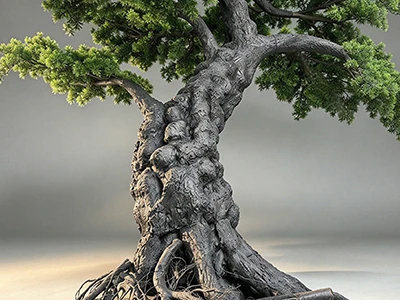
When placing a desktop tree, the first things to consider are light and location. Although desktop trees are small, most plants still need some natural light to grow properly. It's recommended to place it in a bright, well-ventilated indoor location, such as near a window, but avoid prolonged direct exposure to strong sunlight, especially the midday sun in summer, as this can easily cause yellowing, drying, or even sunspots on the leaves. If placing the desktop tree on an office desk or study table, avoid placing it near air conditioner vents, radiators, or other devices that continuously generate heat, as these areas experience significant temperature fluctuations and dry air, which can negatively impact the plant's condition over time. Additionally, it's best to avoid frequent movement, allowing the plant to gradually adapt to a stable light and environment.
Watering is a common area for problems in daily care. Desktop trees typically use small pots with limited soil capacity, leading to noticeable evaporation and waterlogging. Therefore, it's not advisable to water them daily at a fixed time. Before watering, check the soil surface moisture by gently touching it with your finger; if it's noticeably dry, then water as needed. When watering, pour slowly to allow the water to seep evenly into the soil. Avoid letting water accumulate at the bottom of the pot for extended periods, as this can lead to root hypoxia and, in severe cases, root rot. Empty any water from the saucer immediately. Adjust watering frequency according to the season. In hot weather, water is consumed more quickly, so increase watering frequency accordingly. In cold weather or lower indoor temperatures, plant growth slows, so reduce watering to prevent overwatering from harming the roots.
Besides light and watering, regularly observe the overall condition of your desktop tree and address any abnormalities promptly. Regularly check the leaf color, branch condition, and soil condition. If you notice a sudden surge in yellowing or leaf drop, or if leaf tips dry out or leaves curl, don't immediately water or fertilize. First, determine if the problem is caused by insufficient light, temperature, humidity, or overwatering. If dust accumulates on the leaves, you can gently wipe them with a soft, damp cloth, depending on the plant's tolerance, to keep the leaves clean and promote photosynthesis. At the same time, desktop trees should not be fertilized frequently, especially when they are newly purchased, repotted, or in poor condition. It is not recommended to use highly concentrated fertilizers immediately, as this can increase the burden on the root system. The most important thing in caring for desktop trees is to maintain a relatively stable environment and adjust the care method according to the plant's own condition, rather than simply increasing water and fertilizer. This is the only way to keep it in good growth condition.